
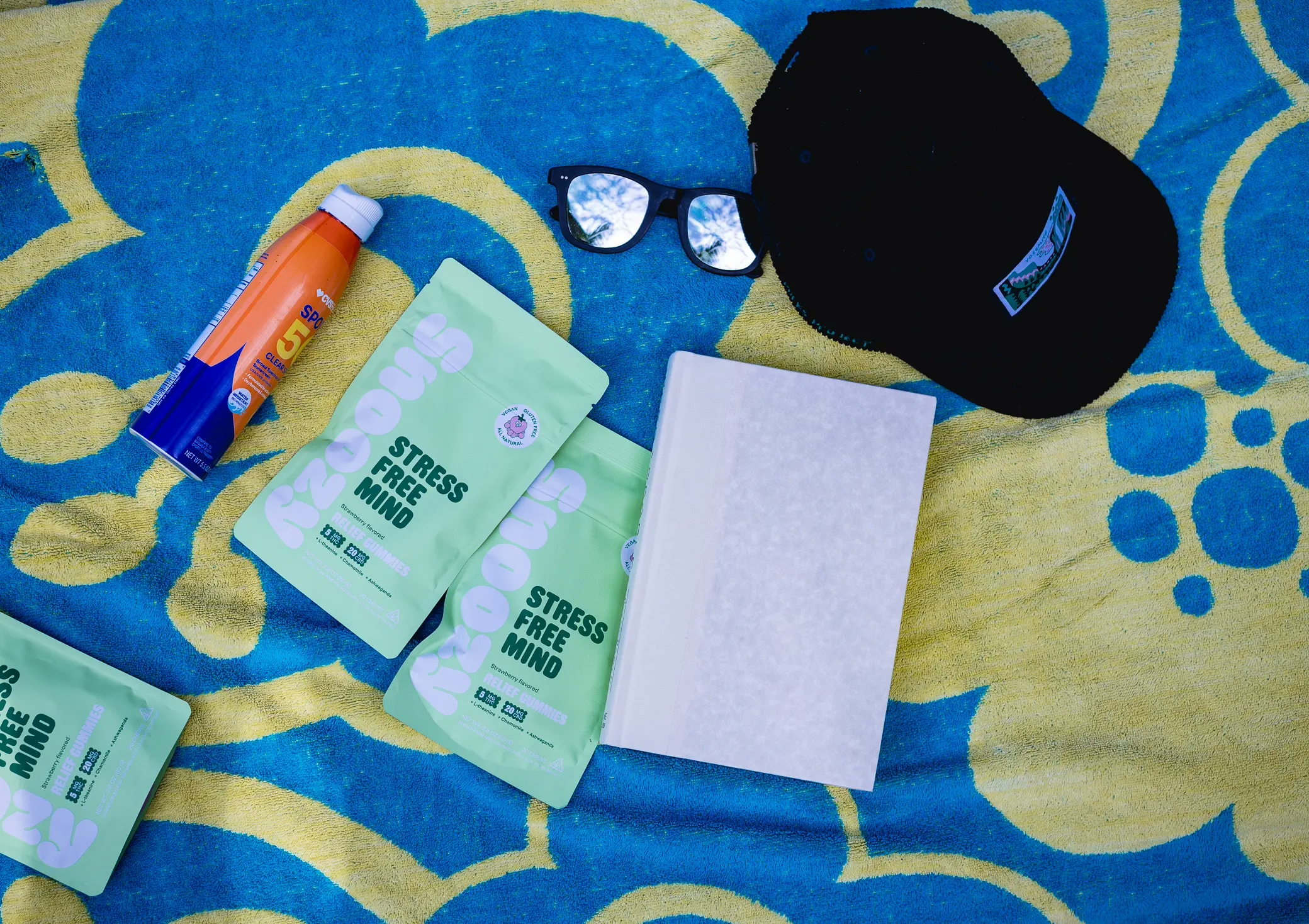
Flat lay photography — shooting objects arranged on a surface from directly overhead — has become the visual language of social media and e-commerce. It’s deceptively simple: lay stuff on a surface and photograph it from above. But the difference between a scroll-stopping flat lay and a cluttered mess comes down to composition principles, lighting choices, and styling details that take practice to master.
I shoot flat lays constantly for product brands, lifestyle companies, and social media content. Here are the techniques that make them work.
The Grid vs. The Organic Layout
Grid layouts arrange items in neat, orderly rows and columns. They feel clean, organized, and satisfying — think of a perfectly arranged desk setup or a symmetrical beauty product collection. Grid flat lays work best for product catalogs, “what’s in my bag” content, and any time you want to communicate order and intentionality.
Organic layouts feel more natural and casual — items slightly overlapping, placed at different angles, creating a sense of movement. These work for lifestyle content, food photography, and brands with a more relaxed, creative identity. The trick is that organic layouts are actually harder to execute well because they need to look casual without looking messy. I typically start with a rough grid and then selectively break the pattern to add visual interest.
Lighting Flat Lays
Overhead lighting (light coming from directly above) is the most natural for flat lays since you’re shooting from above. But pure overhead light is flat and boring. I prefer side lighting from a large window or softbox, which creates subtle shadows that add depth and dimension to each object. The shadows run in one consistent direction, creating a cohesive look across the entire frame.
For bright, airy flat lays (typical for beauty, wellness, and lifestyle brands), I use a large diffused light source from the side with a white bounce card on the opposite side. For moodier, more dramatic flat lays (food, luxury products, masculine brands), I let the shadows go deeper by removing the bounce card and sometimes adding a black card to deepen the shadow side.
Surface Selection
The surface is your background, and it sets the entire mood. Marble reads luxury. Raw wood reads artisan or organic. Clean white reads modern and minimal. Colored paper or fabric can match brand colors for a cohesive branded look. I keep a collection of about 20 surfaces in my studio specifically for flat lay work — including several that I created by painting MDF boards with textured paint techniques.
One important rule: the surface needs to be truly flat. Any warping, ridges, or unevenness shows up when you’re shooting directly overhead. I use rigid boards clamped to a level table to ensure a perfectly flat plane.
Composition Rules for Flat Lays
The rule of thirds applies, but adapt it for overhead perspective. Your hero product (the main subject) should sit at a strong intersection point, not dead center. Supporting props and secondary items fill the remaining space. Leave some negative space — not every square inch needs to be filled. White space gives the eye places to rest and draws attention to the hero product.
Color coordination matters enormously in flat lays because every element is visible simultaneously. Choose props that are within your color palette. Three colors maximum for a cohesive look. Too many competing colors creates visual chaos.
Common Flat Lay Mistakes
Overcrowding is the most common error. More items doesn’t mean a better flat lay — it usually means a messier one. Start with your hero product and add elements one at a time, evaluating through the viewfinder after each addition. Stop adding when the composition feels balanced.
Mismatched scales make flat lays look random. If your hero product is small (like a lipstick), your props should be proportionally small too. A full-size coffee mug next to a lipstick looks absurd overhead.
Shooting at an angle instead of truly overhead creates perspective distortion that makes objects look tilted and unnatural. I mount my camera on an overhead rig or tall tripod with a 90-degree arm to ensure I’m shooting straight down, perfectly parallel to the surface.
Flat Lay Photography for Your Brand
Flat lays are one of the most versatile content types I create for brands. They work for Instagram feed posts, website hero images, email headers, product launch announcements, and print materials. A single well-executed flat lay session can produce 15-20 images that fuel months of marketing content.
See my product photography pricing or get in touch to plan a flat lay session for your brand. Based in Delray Beach, working throughout Boca Raton, West Palm Beach, and Fort Lauderdale.