
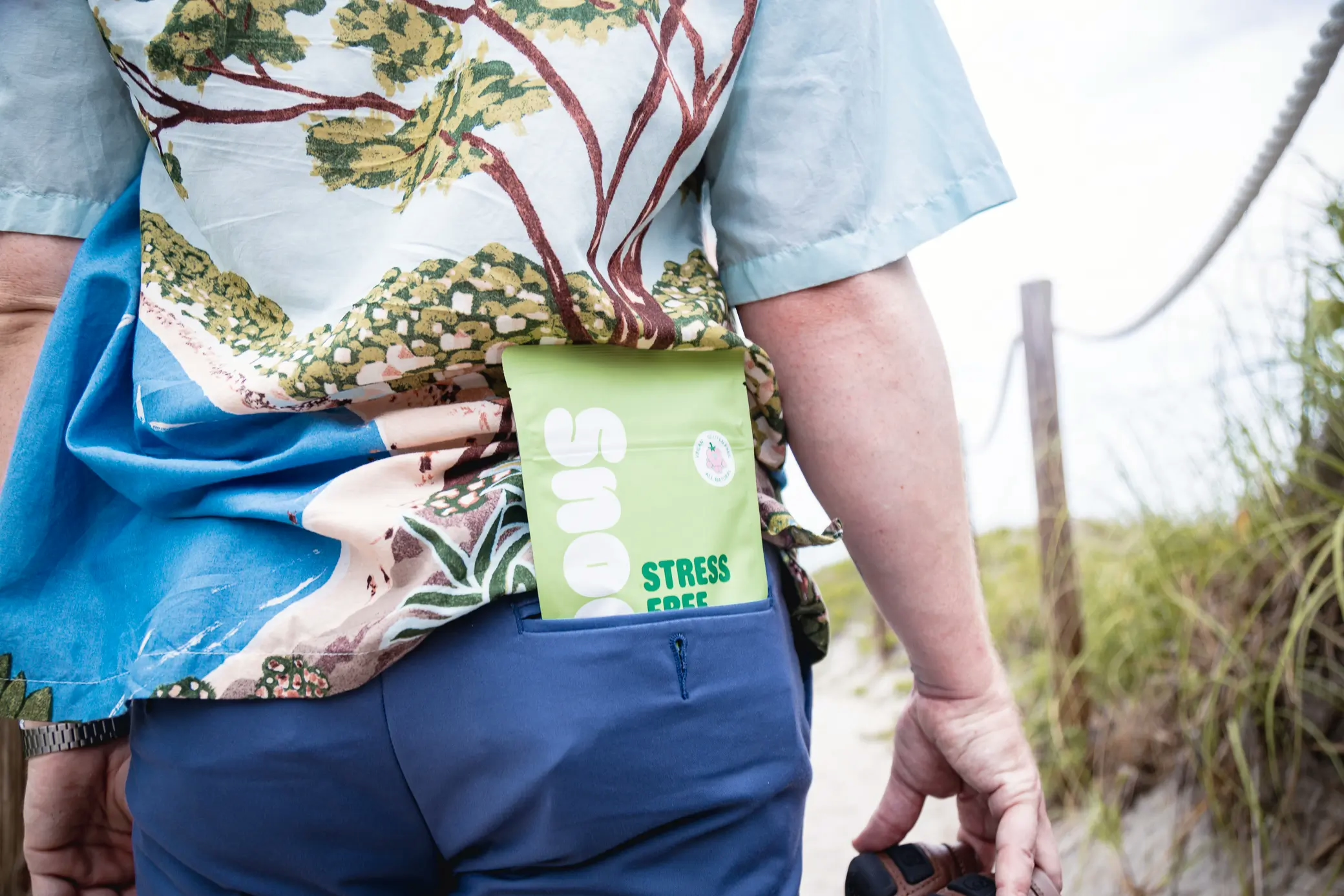
Supplement product photography needs three things: a clean white-background shot of the bottle or tub, a Supplement Facts panel a shopper can read at full size, and close-ups of the capsule, gummy or powder. Keep each image consistent with the physical label, because the FTC counts pictures toward the claims your marketing makes.
Key takeaways
- Shoot the Supplement Facts panel as its own image, straight on, and match it to the label on the product you ship.
- Curved gloss labels throw vertical bands of glare. Tall, soft lights at the sides and a longer lens keep the type readable.
- Macro shots of capsules, softgels and powder show buyers the size, colour and form of what they will take.
- The FTC reads an ad’s images as part of its message, so props such as lab coats and before-and-after pairs can create claims.
- Amazon requires third-party verification for dietary supplements, and Walmart limits the category to approved sellers.
Supplement product photography shot list
A supplement listing needs the container, the label panels and the product itself. I plan each SKU from the list below and drop rows a brand doesn’t need.
| Shot | What it shows | Why you need it |
|---|---|---|
| Front hero on white | Bottle, tub or pouch with the front label square to camera | Main marketplace image |
| Supplement Facts panel | The whole panel, readable at 100% | Shoppers compare doses and ingredients here |
| Other label panels | Other ingredients, directions, warnings and the company address | Covers allergen and usage questions |
| Product close-up | The capsule, softgel, gummy or powder at macro scale | Shows form, colour and coating |
| Scale shot | A capsule in a palm, or the scoop beside the tub | Answers the pill-size question |
| Serving shot | One serving laid out, matching the label | Sets an honest expectation of daily use |
| Range shot | The full line or a bundle together | Collection pages and wholesale decks |
| Lifestyle | The product on a kitchen counter or in a gym bag | Secondary slots, ads and social |
How do you photograph supplement bottles and tubs?
Shoot the container square to the camera with a longer lens, light it from the sides with tall soft sources, and rotate the bottle for each label panel.
Curved labels
A label wrapped round a cylinder is readable across the middle third of the bottle and falls away at the edges. A lens around 100mm on a full-frame camera flattens that curve. Shoot the hero with the brand panel centred, then turn the bottle and shoot the Supplement Facts panel as its own frame. If a panel wraps too far to read in one view, shoot two overlapping frames, or ask your designer for the flat label art to use in an infographic image beside the real bottle shot.
Gloss labels and shrink sleeves
Gloss labels on a round bottle reflect the light as a vertical band, and that band lands on your type. Place a tall strip softbox or diffusion panel at each side so the highlights run down the edges of the bottle and the centre stays clean. A polarising filter cuts glare on gloss paper and plastic. It does little on metallic foil.
White, amber and clear containers
A white bottle on a white background loses its outline. Stand black card out of frame on each side to put a thin dark edge on the bottle. Amber glass and clear tubs look flat from the front, so I add a light behind them to show the capsules or the fill level inside.
Prep matters as much as light. Pick the unit with the straightest label, turn the seam to the back, line up the cap, and remove dust with a blower before each frame.
How do you photograph capsules, softgels, gummies and powders?
Use a macro lens, a small aperture and fresh product from a new bottle. Show the true colour and size, because this image tells a buyer what they will swallow.
Capsules and tablets
I shoot capsules with a 100mm macro lens at f/11 to f/16 and focus stack when the pile is deep. Sort through the bottle with tweezers and pick capsules with no dents and a clean print. A soft light from one side shows the shape, and a grey card in the first frame keeps the colour true.
Softgels
Softgels are translucent. Lay them on white acrylic with a light beneath or behind, and the oil inside glows. Use a large soft source in front so each softgel carries one clean highlight.
Gummies
Gummies sweat and stick under hot lights. I use flash, work fast and replace them with fresh ones from the bottle as they dull. Side light brings out a sugar coating.
Powders
A level scoop beside the tub shows the serving. Side light picks up texture, and a soft brush clears stray powder from the rim. If you show the mixed drink, mix it to the label directions and leave the colour alone in editing.
What do the FDA and FTC say about supplement images and claims?
Neither agency reviews your photos before you publish them, and both hold you responsible for what your label and marketing say.
The FDA covers the label. It states that it does not have the authority to approve dietary supplements before they are marketed. FDA labelling rules call for a statement of identity, a Supplement Facts panel, a list of other ingredients, the net quantity and the name and place of business of the manufacturer, packer or distributor. A structure/function claim, such as the FDA’s own example “calcium builds strong bones”, has to carry the FDA disclaimer that the agency has not evaluated the statement and that the product is not intended to diagnose, treat, cure or prevent any disease. Supplements can’t claim to treat or cure a disease.
The FTC covers advertising, and product photos sit inside that. Its Health Products Compliance Guidance (December 2022) tells marketers to judge the net impression of an ad, including its text, product name, charts, graphs and images. It also says marketers can’t suggest a benefit through implication that they couldn’t claim outright. The FTC expects health claims to rest on competent and reliable scientific evidence.
For a photo shoot, I read that this way:
- Props carry meaning. A stethoscope, a lab coat or a model posed as a doctor can imply medical endorsement or clinical proof.
- A before-and-after pair is a claim about results.
- Text overlays and infographic callouts need the same support as your written copy.
- The label in the photo should be the label on the shelf. Reshoot when the formula or the panel changes.
This section is general information and is no substitute for legal advice. Check your images and claims with your compliance adviser or attorney before you publish.
What do Amazon and Walmart require for supplement listings?
Both marketplaces add their own rules on top of federal law. In April 2024, Amazon announced that dietary supplements need verification through a third-party testing, inspection and certification (TIC) organisation, and that listings without it by the due date face removal. Amazon keeps its full dietary supplement policy inside Seller Central and updates its policies over time, so read the current version there before you plan a shoot.
Walmart’s dietary supplement policy treats supplements as a restricted category limited to approved sellers. It lists the label elements Walmart expects, including the statement of identity, net quantity, Supplement Facts panel, ingredients, directions and manufacturer or distributor details. It requires the FDA disclaimer beside structure/function claims. Walmart’s image guidelines add that images shouldn’t include claims or promotional language about the item.
| Requirement | Amazon | Walmart Marketplace |
|---|---|---|
| Main image background | White, RGB 255, 255, 255 | Plain white, RGB 255/255/255 |
| Framing | Product fills 85% or more of the frame | Item cropped close to the frame |
| Pixel size | 500 to 10,000 px on the longest side; more than 1,000 px for zoom | 2200 x 2200 px, 1:1; 1500 x 1500 px minimum for zoom |
| Image count | One required; at least six recommended | At least four recommended |
The Amazon image figures come from Amazon’s product photo guide for sellers (2024). I shoot each label panel as a full-resolution frame so the listing can show what the bottle says, word for word. If Amazon is your main channel, my Amazon product photographer page explains how I build that image set.
When should you hire a professional?
DIY supplement product photography works for one or two bottles with matte labels on your own store. A light tent, a phone on a tripod and my white background product photography guide will get you a clean hero.
Hire a photographer when one of these applies:
- Your labels are gloss, metallic or shrink-sleeved, and the type disappears under glare.
- You have ten or more SKUs that need to match in angle, scale and colour.
- You need macro shots of capsules, softgels or powder.
- Your compliance adviser wants to approve a shot list, and you need someone who will shoot to it without adding props.
I ask for the approved label files and any claims guidance before the shoot, so the shot list goes past your adviser once. My white-background packshots run $30–$85 per image at volume, and lifestyle or styled images run $55–$440 per image depending on props and set complexity. The product photography pricing page has the full breakdown. For range planning, see my CPG product photography guide. Supplement lines that sit beside topicals can borrow from my skincare and beauty product photography guide.
Frequently asked questions
Do I need to show the Supplement Facts panel in my product photos?
Show it. FDA labelling rules call for a Supplement Facts panel on the label, and an online shopper can’t turn the bottle around. Shoot the panel as its own image, straight on and readable at full size, and match it to the label on the product you ship. Check each marketplace’s current rules too.
Can I use before-and-after photos to sell a supplement?
Treat them as claims. The FTC’s Health Products Compliance Guidance says an ad’s net impression includes its images, and a before-and-after pair tells shoppers to expect that result. You would need competent and reliable scientific evidence to support it. Ask your compliance adviser before you use one in a listing or an ad.
How do you photograph capsules and pills up close?
Use a macro lens around 100mm, an aperture of f/11 to f/16 and a soft light from one side. Pick undented capsules with tweezers, wear gloves and shoot a grey card first so the colour stays true. Focus stack several frames when the pile is deeper than the lens can hold sharp.
How many images should a supplement listing have?
Amazon requires one image and recommends at least six. Walmart Marketplace recommends at least four. A full supplement set runs to seven or eight: the hero, the Supplement Facts panel, the other label panels, a product close-up, a scale shot, a serving shot and one or two lifestyle images.
How much does supplement product photography cost?
My white-background packshots run $30–$85 per image at volume, and lifestyle or styled images run $55–$440 per image. A half-day studio booking runs $1,100–$3,850. SKU count, label finish and the number of macro shots drive the price. Gloss and metallic labels take longer to light than matte ones.
Get a shot list and quote for your supplement line
Send me your SKU list, the container and label finish for each product, the form (capsule, softgel, gummy or powder), the marketplaces you sell on and your approved label files. I’ll reply with a shot list your compliance adviser can review and a per-image quote. Send your SKU list and label files to start.

